
Pepper the Pug and Her Royal Ancestry: How Pugs Went from Palaces to My Couch
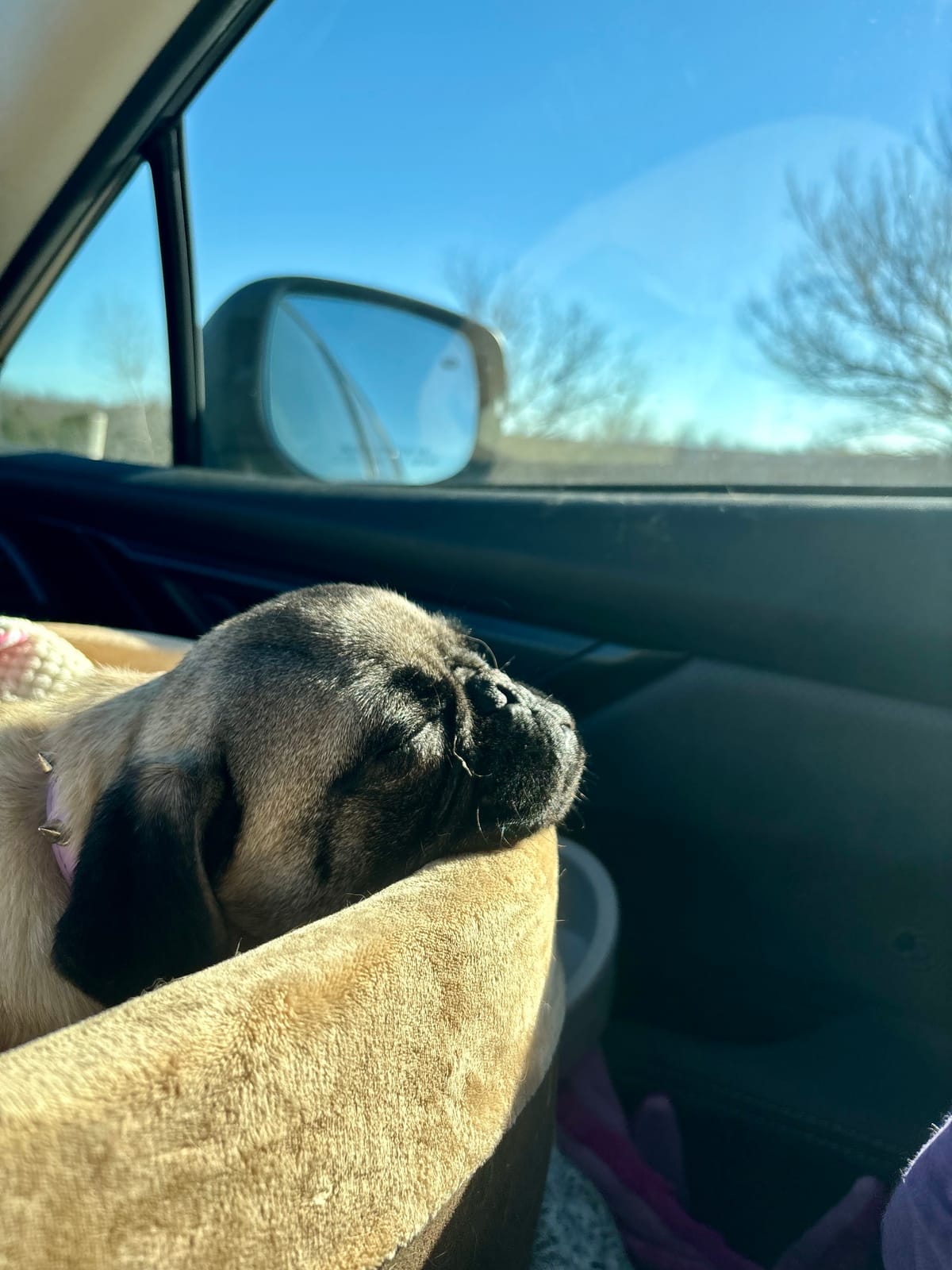
My husband and I recently relocated from Boston back home to the South, which has given me two new things: a lot of time and a lot of space. Naturally, for some reason, I decided to purge those immediately.
As I was "casually" browsing Petfinder one day, as one does, I stumbled upon an absolutely crazed-looking pug for adoption. She had only one photo, which was blurry mid-jump and consisted mostly of her protruding walleyes. She was a vision in tan, and we had to have her. One roadtrip later, and we had our Pepper.
Quick do-gooder note because I have to: Being a pug, Pepper is brachycephalic, meaning her nose smushes up against her the rest of her face. Her sister, Cupcake the English bulldog, is as well. My husband and I love our little smushfaces, but we also devote a lot of time to cleaning, doting on, and otherwise spoiling them. Brachycephalic pets (bulldogs, pugs, shi tzus, and cats like Persians and Himalayans) have been bred for this cute appearance, but it causes quite an array of health issues for them and they require delicate care. For that reason, we do not buy from breeders. There are tons of adoptable adorable pets needing homes, even purebreds, so please check out your local rescue when you're looking for a new companion. //
I had never had a pug or a puppy before, so needless to say, it's been a bit of a learning experience and exercise in patience. And why not add another learning experience to get that nice little dopamine treat? Here is the history of the pug.
Ye Olde Pug
Pugs have an impressively long history and are one of the oldest breeds, likely originating in east Asia. The earliest records of what appear to be pugs are from China/Tibet. Ancient records referred to a type of smooth-furred dog known as Hah-pah (Romanized a litany of ways, including happa and haba), which may have been the proto-pug. (A modern Mandarin word for pug is "哈巴狗" or "hǎbagǒu," with "gǒu" meaning "dog.") "Lo-chiang-sze" or "lo-sze" (named after where they were found Szechuan) referred to short-muzzled dogs with short coats and small ears, which first appear in Chinese records in around 650 BC. and were likely pugs. More definitive records suggest the existence of today's pug by 400 BC.
The origin of the English word "pug" is unclear. One option is the Latin pugnus or "fist," due to the dogs' short square face. Another is after the marmoset monkey (known at the time as "pug monkeys" and kept as pets [!]), which had similar small scrunched faces to pugs. The fawn-colored pugs are the OGs, with the black-colored versions developing far later.
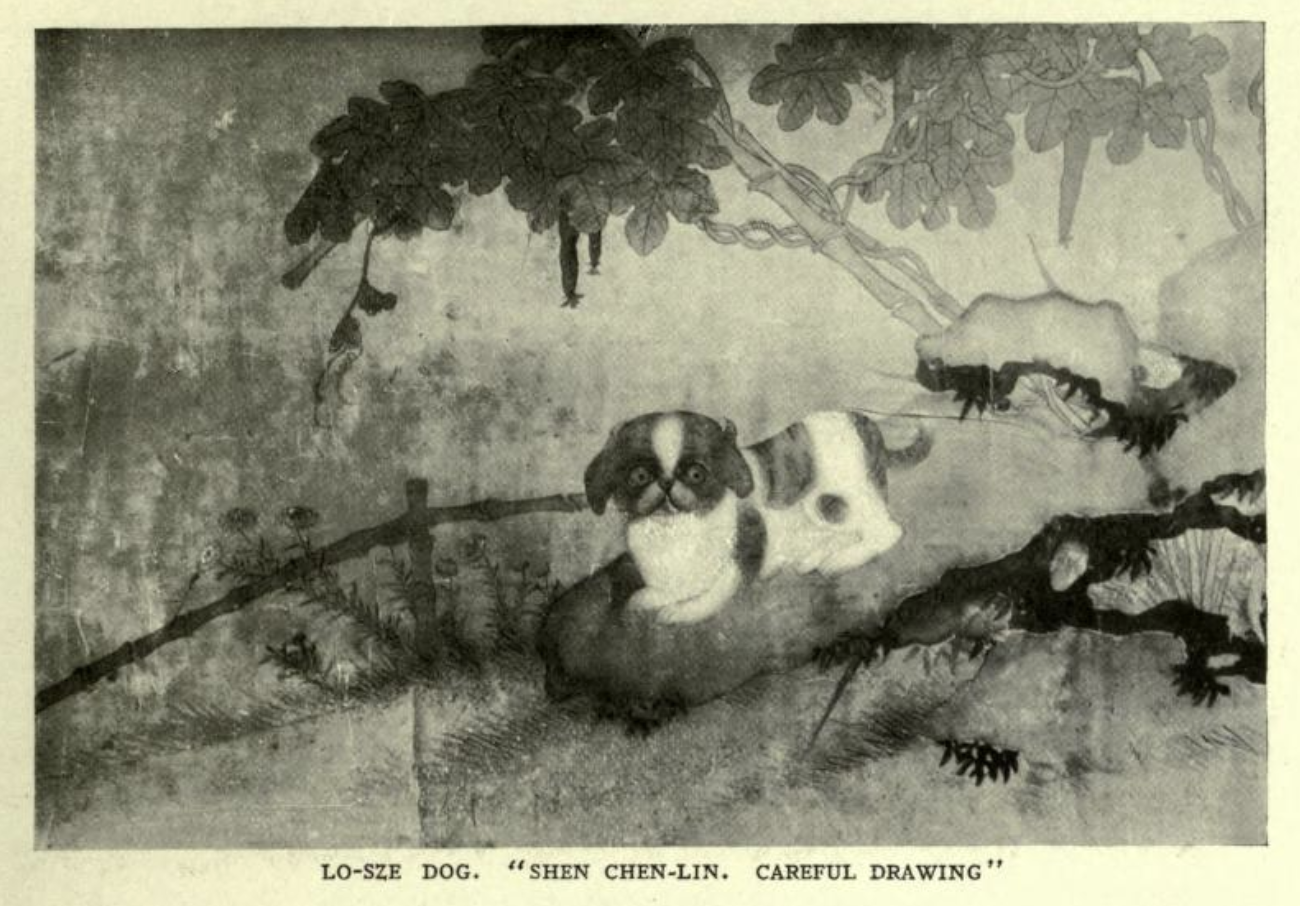
In ancient China, pugs served as spoiled lapdogs of (also spoiled) emperors. The dogs were guarded by soldiers and given their own servants, carriages, silk cushions, and even titles of distinction. They and their Pekingese cousins were thought to have kept the royals warm in their cold palaces, sometimes scurrying into the drapey noble sleeves like a little living HotHand). Upon a visit to Beijing in the late 1200s, Marco Polo reported "golden-coated, nimble dogs" scurrying around the palace (alongside lions, which seems safe).
It is thought pugs' wrinkliness was bred intentionally in China, in the hopes of patterning the word for "prince" right into their foreheads. Believe it or not, this seems to have been somewhat successful, as the Mandarin character for prince (wáng - 王) resembles something like the Arabic letter E if it were mirrored horizontally. Some pugs eventually developed this highly prized forehead pattern with three horizontal wrinkles separated by a vertical bar. (Pepper has yet to develop her full Wrinkle Set, but we'll see if she's emperor-worthy soon enough.)
Coming as news to no one, the wrinkly cuteness of pugs has, since their antiquity, had Homo sapiens in an absolute chokehold. Old poetry and paintings contain many an ode to the little scrunched-nose hellions, and from the U.S. to England to Russia, at various times, pugs have been seen as highly fashionable lapdogs to have and hold.
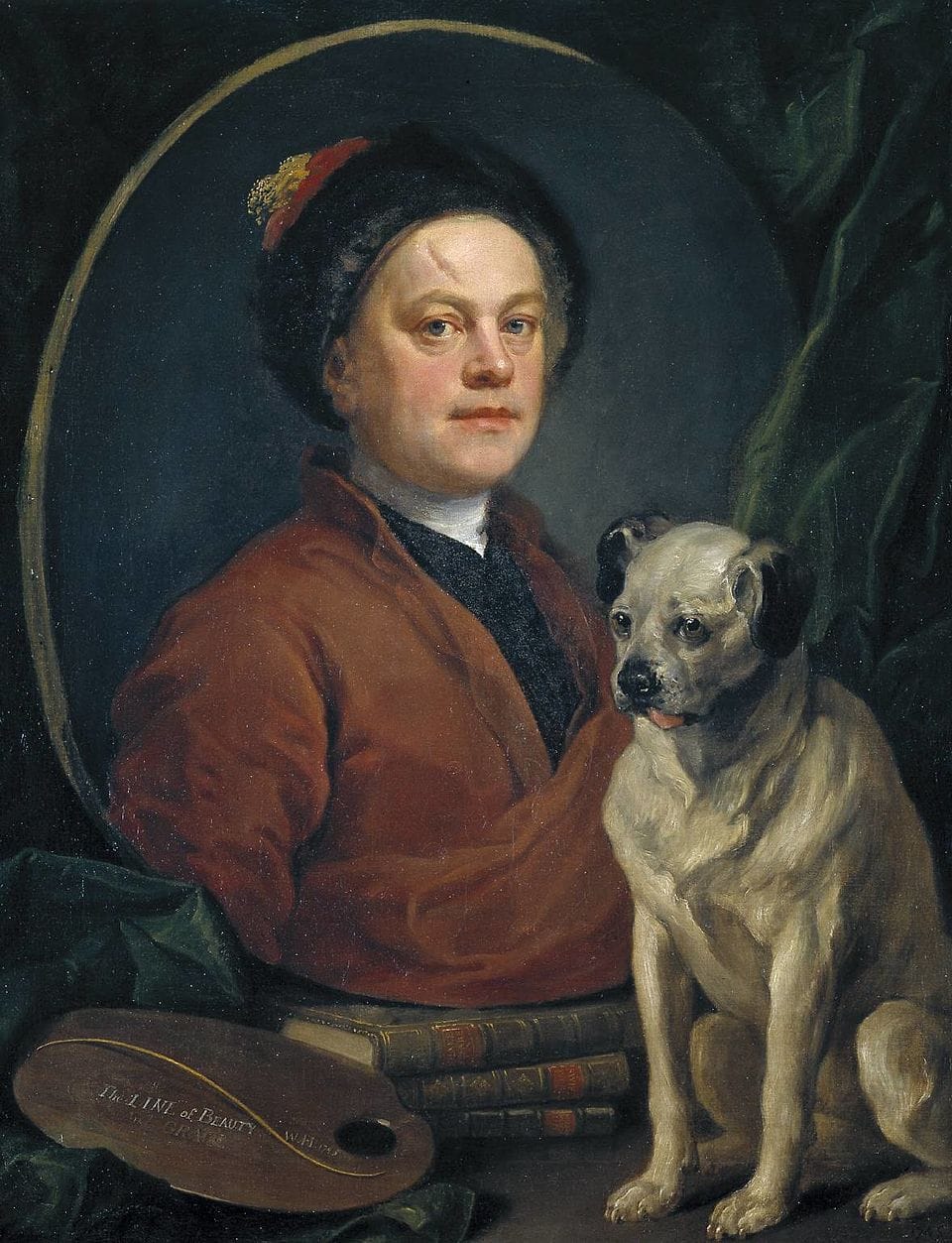
As a result, there are even Famous Pugs of History. Notables include Pompey, the "son" of William the Silent. In 1572, Spanish soldiers attempted to assassinate William, but Pompey saved the day, barking at the assassins as they creeped up to Will's tent.
Marie Antoinette had a pug named Mop, who she summoned to France from her hometown of Vienna around 1770 after, fourteen and doomed, she moved to marry Louis XVI.
Another famous exemplar is Fortune, the pug of Napoleon Bonaparte's wife Josephine. It is said Jo refused to kick Fortune from the marital bed, resulting in the dog biting Napoleon on his wedding night in 1796.
Queen Victoria (1819-1901) had so many pugs (nearly 40 during her time on the throne) that to name them all would take too long. One 1887 photo shows Victoria with one of her pugs, Balmoral, who matched her dour expression quite impressively.
Finally, fashion designer Valentino (1932-2026) spoiled a grumble (the actual noun for a group of pugs; save that for the SAT) of six--Milton, Monty, Maude, Margot, Maggie, and Molly--who he toted around with him on his private jet.
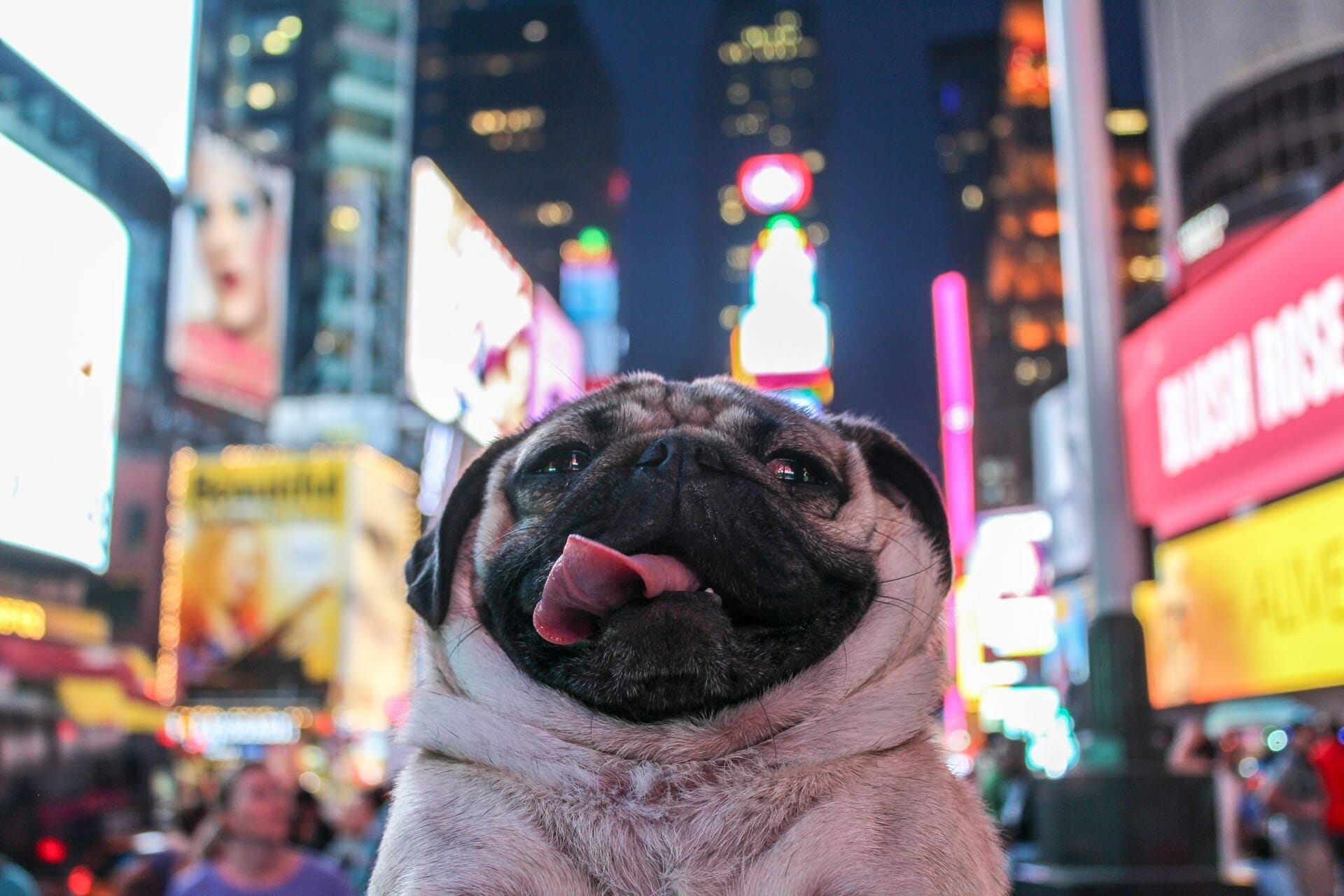
Modern pugs make great family members. With companionship baked into them from the very start, they are gentle, playful, and affectionate. (Pepper is, if anything, too affectionate, rather fond of repeatedly licking chins, lips, and any other available skin.) Some pugs can be a bit reserved with strangers, but as a breed, they warm up well to newcomers, including other pets. They are bad at swimming but fantastic at sitting around and being cute, having had thousands of years to master it.
Sources:
- Dogs of China & Japan in Nature and Art, V.W.F. Collier
- Doug the Pug in NYC, Wikipedia Commons
- "Family group with Queen Victoria," Royal Collection Trust
- "In Memory of Valentino’s Beloved, Private-Jet-Riding Pug Milton," by Julie Miller, Vanity Fair
- The Painter and His Pug by William Hogarth, Wikipedia Commons
- The Pug-Dog: Its History and Origin, Wilhelmina Swainston-Godger
- "Pug Facts You May Not Know," by Katherine Ripley, American Kennel Club
- "Pug History: From Emperors’ Companions to Family Pets," by Denise Flaim, American Kennel Club
- Pugs in Public, Kendall Farr
- "Tiny Breeds Out of China Have Connections to Royalty," by Shelley Kinser, The Orlando Sentinel
- "哈巴狗", Wiktionary

