
Late Bloomers: Mary Delany and Creating Art at 72
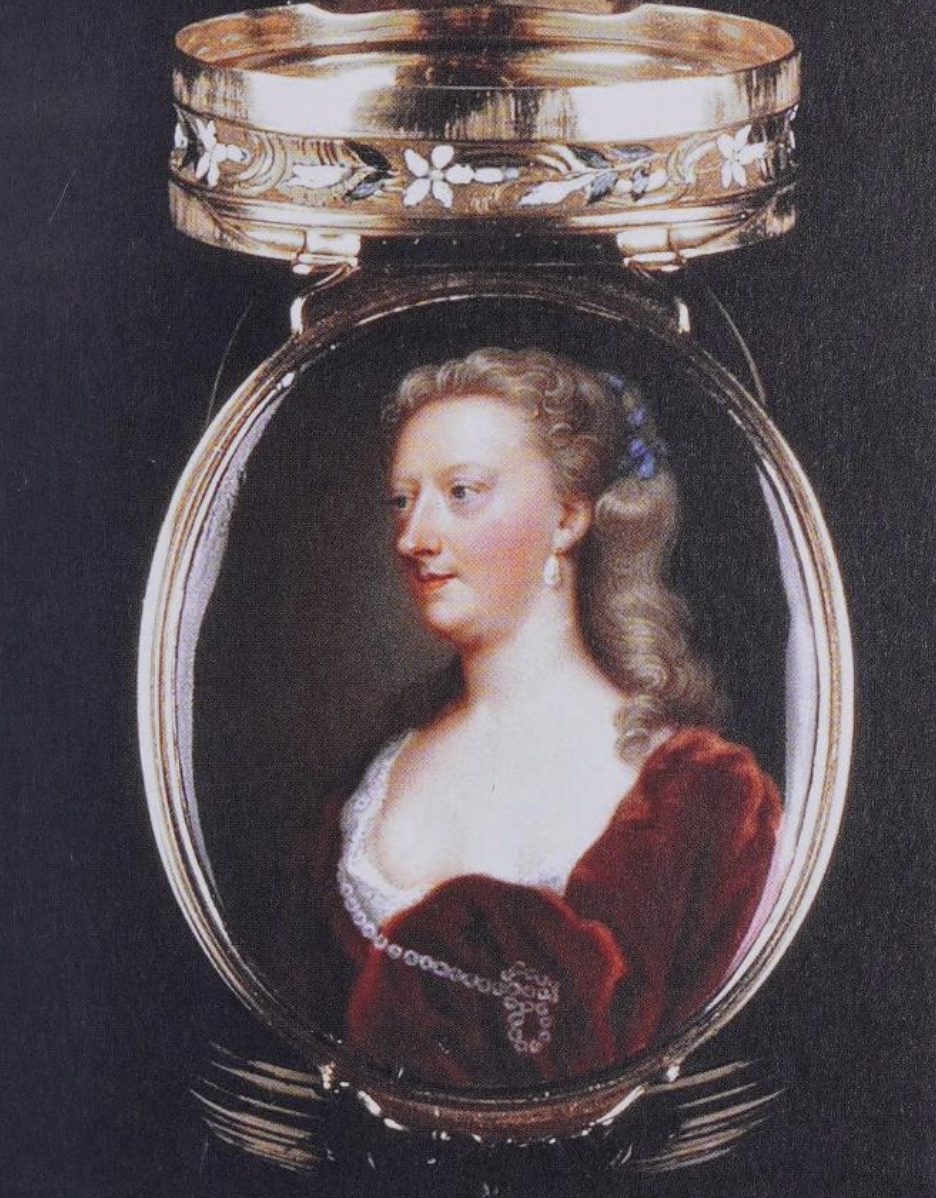
Recently, my husband and I moved from New England back to where we first met, in Arkansas. We (naively, probably) thought the move would be pretty straightforward and even relieving. It's been difficult in ways I didn't really expect. What do I do with all this free time? How do we revive relationships we hadn't kept up with as we should? And, probably most existentially, who am I after hitting a hard reset on my career, my home, and my hobbies at 32?
I worked in BigLaw, which was, as many could expect, largely terrible. But it was great for my workaholism. Now that it's gone, I'm having to figure out what I want to do with all this time and freedom and sanity I have. I'm trying things I never had the bandwidth to experiment with before: crafting, learning languages, random things like this blog. And when I hit hard spots in one of those activities, I keep thinking: Ugh, why couldn't I have started this when I was 12? And of course, the answer is because life doesn't work that way. And, perhaps more gently, it doesn't matter: it's never too late to learn something new.
It's easy to feel alone in situations like that, where it seems like years have passed you by without you ever noticing. There's a great James Baldwin quote that goes: "You think your pain and your heartbreak are unprecedented in the history of the world, but then you read." And I have recently been reading about this really interesting woman who, at 72, created an entire field of art by crafting delicate beautiful "paper mosaicks" (as she called them), delicate paper collages of flowers that look like paintings.
What I really love about this story is what it shows about the revitalization of childhood. Today's subject, Mary Delany, was arguably an artist from the age of 6, but it was only in her 70s that she fully grew into the creativity, ingenuity, and vitality she'd carried her whole life.
That theme of "re-finding yourself" is so important, I think, for some of us who feel like we've lost our way as adults. It's easier said than done. But part of why I'm trying to read and write more is that I loved learning as a child, and it feels like reclaiming some nostalgia and self-identity to cozy into that again. I hope today's post is inspiring because it shows that, at later age and after trauma and even seemingly accidentally, we can find news to create beauty and grow into ourselves.
Late Bloomer: The Story of Mary Delany
To say that Mary Granville Pendarves Delany (1700-1788) was ahead of her time is an understatement. Though best known today for her paper art, she did not begin that work until she was a widow in her 70s. However, what she created was so unique and precise that, even recently, scholars have devoted attention to demystifying her methods. As she said it, she had quite literally "invented a new way of imagining flowers."
But she didn't even stop there. She was almost compulsive in her work, also writing volumes of writings (letters, diaries, a memoir, and a novella) and creating art with other materials such as oil, pastels, graphite, plaster, shells, fabric, and feathers. (Her second husband once said Delany "works even between the coolings of her tea.") She was married twice but also had long-term relationships, of unclear levels of intimacy, with women. She was generally well-connected, with the richest woman in England as a patroness and the satirist Jonathan Swift as a dinner-party flirting partner. Delany had a sharp wit, a bevy of cats, and no children. No doubt, for her time, she was "unusual."

Early Life
Mary Delany was born in May of 1700 in a little village in Wiltshire, England. Her parents were of notable lineage–her father was a colonel, her mother the daughter of a baron–but not great wealth, with her father's brothers controlling the family fortune.
Around 1706, Delany was sent to a school for girls in London. A classmate reported that this is where Delany first engaged in paper art, cutting little birds and flowers from paper and pinning them to her dresses for safekeeping. But shortly afterwards, her father sent her to live with his very well-connected but stern sister, hoping to boost Mary's prospects. There, Mary received the full fancy 1700s lady's education: curtsies, dances, embroidery, French. The hope was she would join the Royal Court, but for political reasons, that plan fell apart.
Instead, at only 17, she was married off to a near-60-year-old, a jealous wealthy often-drunk landowner named Alexander Pendarves. He was bulky and gout-ridden, and from the outset, he creeped Delany out. When forced to marry him, she was devastated and wrote, "I was sacrificed. I lost, not life indeed, but I lost all that makes life desirable – joy and peace of mind." During this miserable marriage, she felt constrained from creating art, though she was able to do some work, like renovating their grand home. Pendarves died when Delany was only 24, leaving her with, materially, very little but, existentially, the wealth of freedom.

Atypical of her time and against her family's wishes, Delany did not remarry until she was 42, this time to a friend of Jonathan Swift's, a Protestant Irish clergyman (a "dean") named Patrick Delaney. She lived with him near Dublin on an eleven-acre estate where she renovated gardens and worked on her crafts. (Not a bad life.) Their marriage was a loving one, lasting for over 20 years, and Patrick found his wife to be incredibly talented in, probably among other things, dancing and harpsichord. (It seems Delany wisely waited for a good man to come along, having turned down up to eight previous suitors in her decades of widowhood after Pendarves. In fact, at one point she seemed to have largely given up men in general, writing in 1731: "Would it were so, that I went ravaging and slaying all odious men, and that would go near to clear the world of that sort of animal; you know I never had a good opinion of them, and every day my dislike strengthens; some few I will accept, but very few…".) (Relatable.)
She was also a "bluestocking," immersing herself with like-minded women who discussed arts, politics, and science. She was a close friend of Elizabeth Montagu, who famously hosted a bluestocking circle. (I only hope that, should I time travel to the mid-1700s, I would be that cool.) In these intellectual circles, female friendships were strong and close, sometimes even romantic. It's not clear where Delany's fell, but she admitted she valued her female friendships, which she framed as "freely chosen," more than the concept of marriage.
But this is not to suggest she was cut off from men. In fact, she was friends with several notable naturalists (i.e., botanists, in part), including Joseph Banks, which granted her easier access to her inspiration.

Later Life
After the death of her dear sister Anne and of Mr. Delany, Mrs. Delany went to visit Margaret Cavendish Bentinck–Duchess of Portland, a friend of hers, and likely the richest women in all of England. The Duchess's unfathomably huge Buckinghamshire estate housed a zoo, an aviary, gardens, and impressive collections of shells and antiquities. The Duchess was a horrible insomniac, staying up late with books and sleeping in til noon. (Highly relatable.)
One day in 1772, while visiting the Duchess, Delany noticed that a piece of red paper resembled a nearby fallen flower petal. Intrigued, she grabbed something sharp and carefully cut petal shapes out of the paper until she had a lifelike geranium. She pasted it onto black paper, creating her first "mosaick." When the Duchess poked her head in, she was unable to tell if Delany was holding a real flower or a fake one.
Inspired (and likely flattered), as well as spurred by the grief of losing her two closest loved ones, Delany went on to create over 900 additional collages over the next ten years. The art form was a great fit for her; while her busy mind had not slowed down, her vision had worsened, making other options like embroidery more difficult.

Artwork with flowers was a relatively common interest of women in Delaney's time. However, Delany pushed the envelope. Her work was not intended to boost her marriage prospects; it was a deeply felt personal endeavor. (And it was for other women as well, including Elizabeth Blackwell [not the one who became the first doctor in America], who used her knowledge of flower painting to illustrate A Curious Herbal.) Delany labeled her creations with surgical scientific descriptions, including both the Latin and common names of the plants, their collection number, and their date of creation. (Keep in mind: at this time, Linnaeus, inventor of the modern biological naming system, was a contemporary, born seven years after Mary and first publishing parts of his naming system in 1735.) True botanical knowledge of this degree was seen as "unladylike," the focus on pistils and stamens allegedly too sexual for the gentle womenfolk. Delany defied this not just by her horticultural precision but by her choice of collages, often emphasizing the reproductive features of flowers and at times mirroring the shape of female anatomy, a la Georgia O'Keeffe. (Or, really, considering the timeline, O'Keeffe did so a la Delany.)
Her process to create her work was exacting. She'd make the deep signature background for her flowers using watercolors, making an ink-black slate. She'd then paste hundreds and hundreds of pieces of colored paper, from tiny dots to larger slivers, to create flower images so accurate that today's botanists still consult them.
Delany died in April of 1788, just short of her 88th birthday.

Her work has been described as subtle, intricate, lifelike, and even "intense and vaginal". (Also relatable?) Recent renewed interest in her work, which was formally ignored as amateur "women's work," is clear. For example, just one of her pieces sold for an easy $30,000 last summer at a Christie's auction.
You can now view all (!!) 980+ of Delany's collages via The British Museum.
Sources:
- "Celebrating LGBTQ History Month with Mary Delany's Sapphic Flowers," Chelsea Physic Garden (February 13, 2023)
- Collection Search: Mary Delany, The British Museum
- Mrs. Delany: A Life, Clarissa Campbell Orr
- Mrs. Delany and Her Circle, edited by Mark Laird & Alicia Weisberg-Roberts, Yale Center for British Art
- The Paper Garden: An Artist Begins Her Life's Work at 72, Molly Peacock
- "'She Has an Activity of Mind that Never Lets Her be Idle': Mary Delany, the Enlightenment, and the Creative Arts," Kristina Decker, Women's Writing