
A Whale of a (Bad) Time: The Tragedy of the Essex
Since leaving New England, I've missed the sea more than I would have expected. That sounds like a surly ship captain thing to say ("Me first love 'twas the sea!"), but in Massachusetts, we lived on a lovely little street with a beach cove at the end. All year across Boston, you could hear the gulls and feel the wind off the Atlantic. Which is fine and dandy until about late October. I definitely don't miss the winter, cold, and dark, and I am getting my oceanic fix soon enough: my husband and I are going to Alaska this fall, and I could not be more excited. We've wanted to go for years.
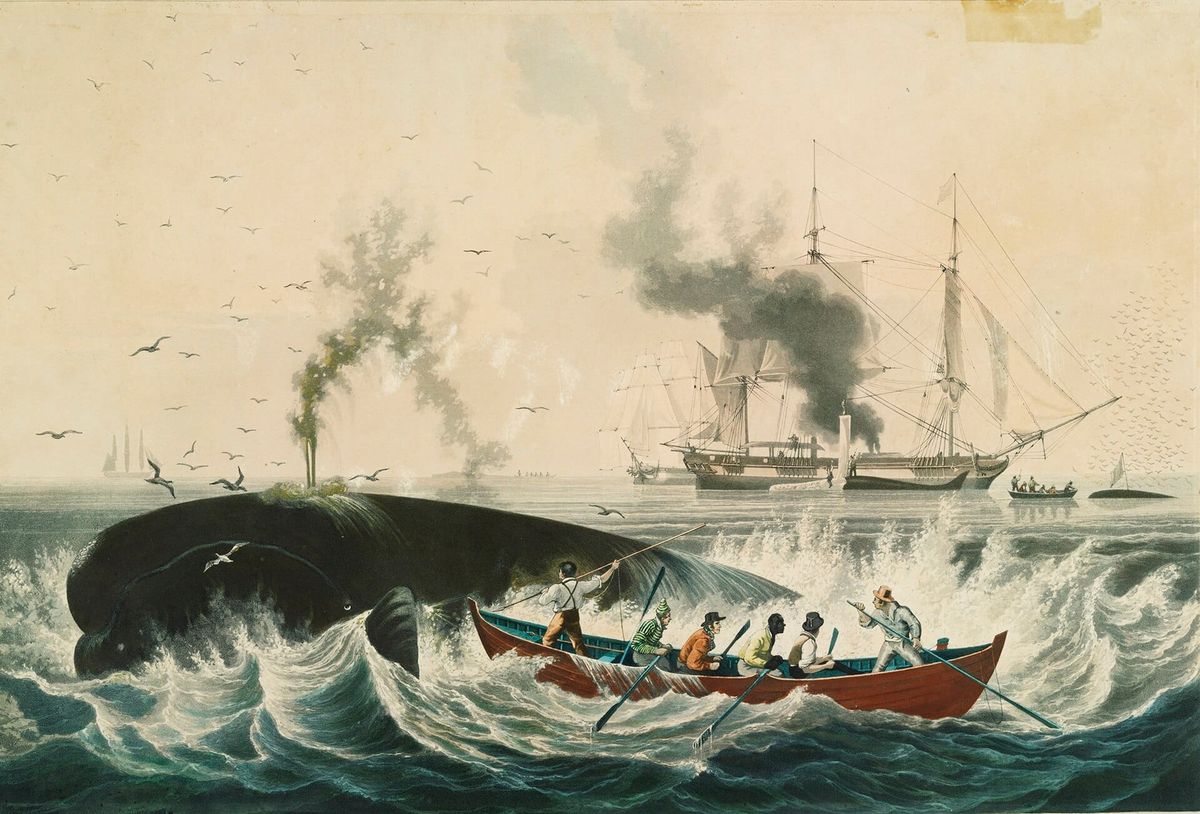
I'm always half-scared, half-thrilled by the open ocean. I imagine just bobbing there, defenseless, with no land in sight, though the odds of that ever happening are (thankfully) just about zero. No doubt part of that fear comes from my constant fascination with morbid sea stories. One of the "best" (as in, most incredible) is the tragedy of the Essex, the sinking of a Nantucket whaleship by a rage-filled bull sperm whale. As you may guess, the incident inspired Herman Melville's Moby-Dick.
That Whale Was Definitely Being a Bit of a... Well, You Know
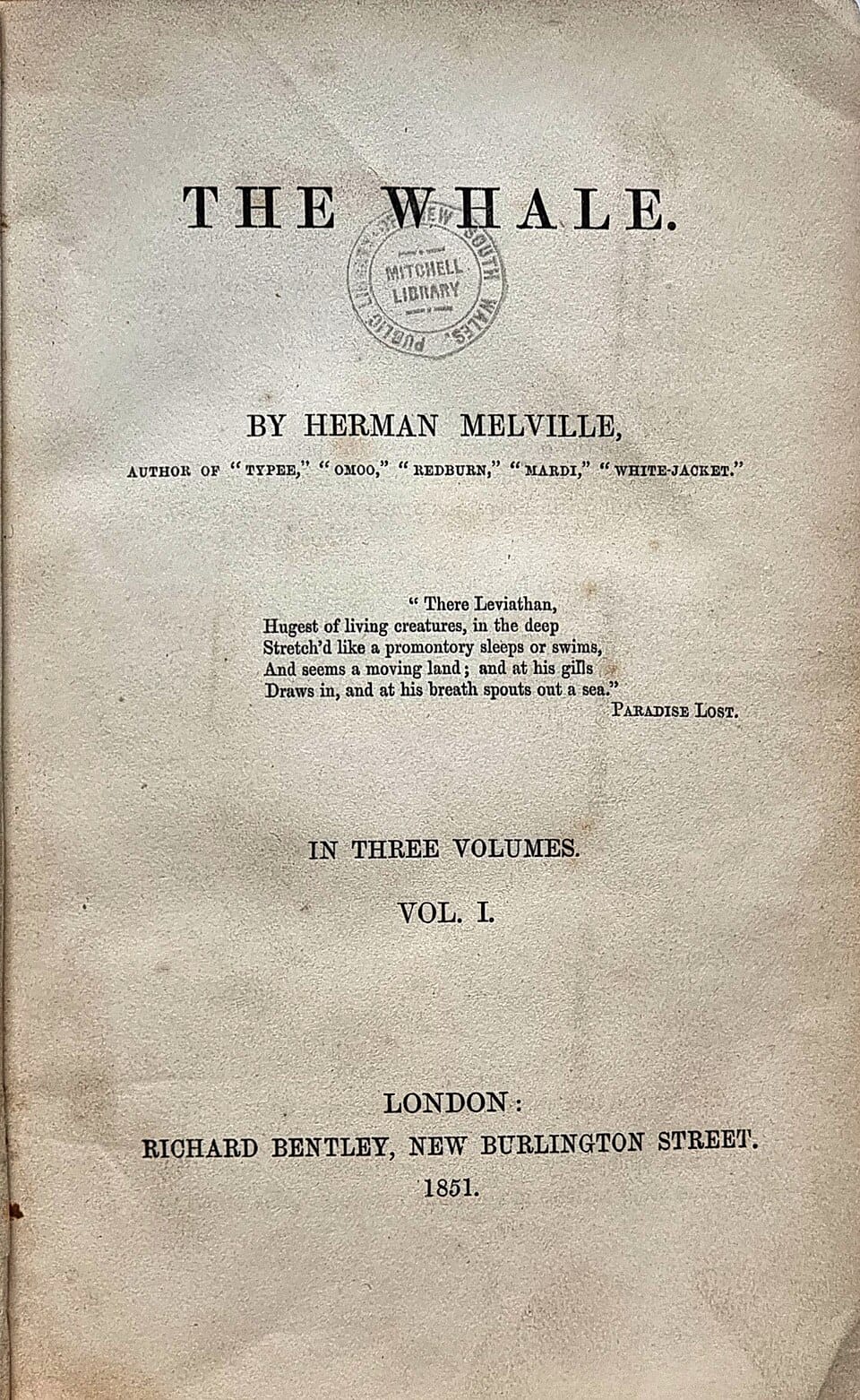
Moby-Dick was published in 1851. A staggering 635 pages, the epic was Melville's opus. He learned of the Essex, and he never let it go, in his later life writing again about the subject in his poetry.
Melville was in his early 30s when he wrote Moby-Dick in a frenzied 18 months. He drew not only from the lore of the Essex but from his own three years or so of experience at sea. Interestingly, the book was a dud in its own time. However, it is now an indisputable part of American literary canon. (No one asked my opinion on that, clearly. I read the book in high school [not even for a class; I was really hoping for morbid whale tales] and hated it. I did read once that the droning mid-book diatribes were intentionally dull and aimed to give the reader the feeling of being on a lengthy sea journey. Which seems like a bad idea, given that nothing quite shows the terribleness of a lengthy sea journey like Moby-Dick and the Essex.)
The "Tragedy of the Essex" is an action-packed story, but it is also a story about a particular sliver of history that can seem foreign today. As a child, I remember thinking the boat just happened to be near a giant whale; it didn't click that they were pursuing the whale. While American whaling is no longer a thing, it was a huge thing historically, including in the mid-1800s.
The Hunt for Whales
Understanding the first pinnacle of whaling requires situating ourselves in the reality of early 19th century life. There was no lightbulb. There was no Yankee Candle store. Especially in places like New England, where I can attest the winter sun sets at 3:00 or so, you simply couldn't see for half the time or more.
Eventually, people began to use tallow candles for light. Back then, they were repulsive. Made most often from cow fat, they smelled terribly, produced a lot of smoke, and burned out quickly. Though beeswax was an alternative option, it was too expensive for everyday use. And not wanting to simply stop doing anything every day at mid-afternoon, people absolutely needed everyday use.
During industrialization, it was discovered that whale oil (made by boiling blubber, most often of baleen whales) produced a cleaner, brighter burn. (Unsurprisingly, it did kind of smell like fish, but perhaps that's better than burnt cow fat.) While still pricier than tallow, whale oil's bright durability made many think it was worth the cost, and there was quickly tremendous demand, kicking off an entire profitable industry.
By the mid-1700s, the U.S. sent out over 700 whaleships to hunt ocean goliaths. Though the Essex and Moby-Dick involve a powerful sperm whale, these were actually not the ideal targets for whalers. (Poor bowheads and rights were slower, more buoyant when hunted, and ultimately easier to harpoon. The industry was so active that these species were hunted to near-extinction.) Nonetheless, just about any baleen would do, and that included sperm whales.
Americans first captured a sperm whale by boat in 1711. Whale oil from sperm whales was occasionally and unfortunately called "sperm oil." Sperm whales are named for the spermaceti organ, which fills their giant head. The organ is full of 500 gallons of a pearl-colored liquid wax called spermaceti that helps the whales with buoyancy and echolocation. So "sperm whale" does indeed come from an unoriginal individual looking at spermaceti and deciding, "Hm, looks like something else I've seen. Let's call it."
Nantucket and Its Ships
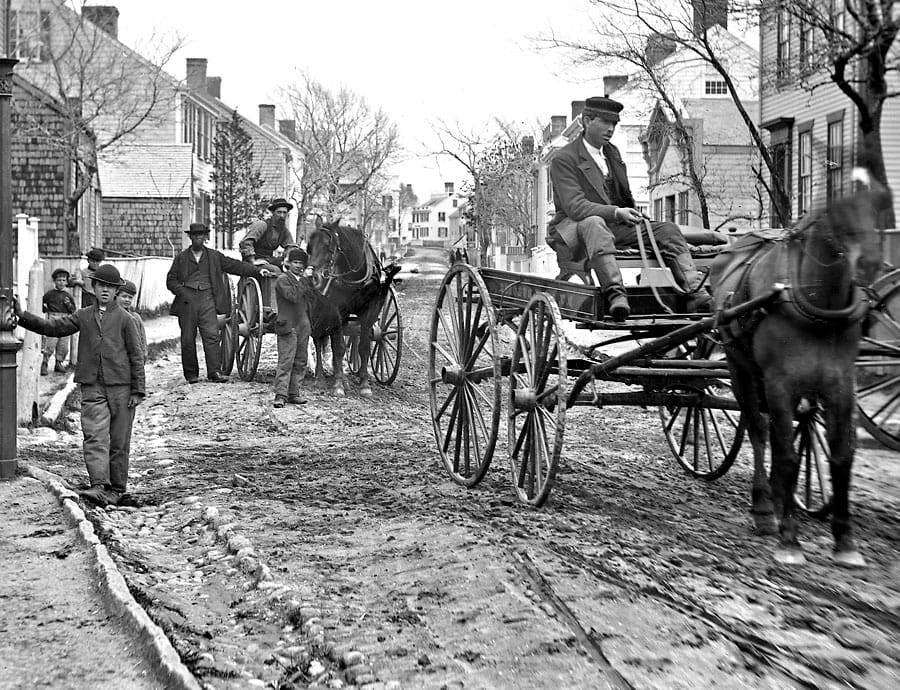
Though merely 700 residents, the tiny island of Nantucket, Massachusetts was chock-full of mariner dynasties, with fathers and sons and sons' sons all earning a living from the sea. Unsurprisingly, by the 1800s, Nantucket boasted the top whaling port in the world.
One of its native whaleships was the Essex. Like all whaleships, it was an impressively complex vessel. Often viewed as "floating factories," whaleships were built to withstand dragging the baleen whales aboard, slaughtering them, and processing the oil right there in enormous vats. Despite Nantucket being literally inside the Atlantic ocean, the Essex, like most whaleships, headed to the Pacific, where there were several known whaling hotspots.
The Essex was built in 1799. By the time it departed for its final journey in August 1819, it was no longer state-of-the-art. Newer ships were larger and sleeker. But the Essex was a respected veteran, with previous voyages having been highly profitable. Ironically, much like the Titanic, the Essex was actually seen as a lucky boat to take. (Lesson: never trust these claims about a ship.)
The Essex Sets Sail
On its 1819 journey, this sterling reputation began to fade quickly. Only two days into the anticipated 2.5-year journey, the Essex hit a squall (a sudden and intense storm at sea, for the landlubbers like myself) and nearly sank. It lost two of its whaleboats, the smaller 20-foot boats that would leave the main ship to go harpoon the whales. However, the captain, George Pollard, carried on. He may have been in an optimistic mood, being only in his late 20s and having gotten married just two weeks before.
However, the omens continued. Five weeks later, the ship reached a promising spot to begin whaling, only to find the waters over-harvested. This meant the crew had to sail even deeper into the South Pacific to find whales, moving farther and farther from land. They were able to make a brief anchor in the Galapagos, home of cute, huge, and apparently tasty tortoises, which the crew hoarded for food. Story goes that one crew member must not yet have had a general sense of foreboding and was still in a trickster mood. While lounging about on the island, he decided to set a turtle on fire as a fun "prank." The fire immediately spread, and several men barely escaped being burnt to a crisp. Pollard was justifiably furious. (Probably by the insubordination and not from the deeply-more-devastating fact that the "prank" may have led to the extinction of both a tortoise and mockingbird species. A burning-tortoise prank was the pyrotechnic gender reveal of the 1800s.)
The crew's luck did turn for a bit. For several months, the Essex nabbed whale after whale, filling 450 barrels of oil in just two months.
The Tide Turns and a Whale Stoves
Then it all went to hell. On November 20, 1820, while staying aboard the main ship as it floated in the middle of the Pacific, the 23-year-old first mate, Owen Chase, spotted an enormous whale in the distance. He estimated it was 85 feet long, facing the ship, and hellbent on revenge for its harpooned comrades. (Okay, he may not have sensed the last part.)
Out of nowhere, the seemingly-steroidal whale slammed head-first into the Essex, leaving a sizable hole. It then swam under the ship and began to thrash and bite its jaws. Rushing to fix the hole, the men were horrified to see that the whale was not quite done. Instead, it was returning at twice the speed as before and with "tenfold fury and vengeance" according to Chase. This time, the whale hit the bow (the front) and broke through the hull (the main watertight body of the ship). Needless to say, this was not great. The ship began to tilt and water flooded the ship, leaving the crew no time to do anything but lower the smaller whaleboats and fill them with as much supplies as they could.
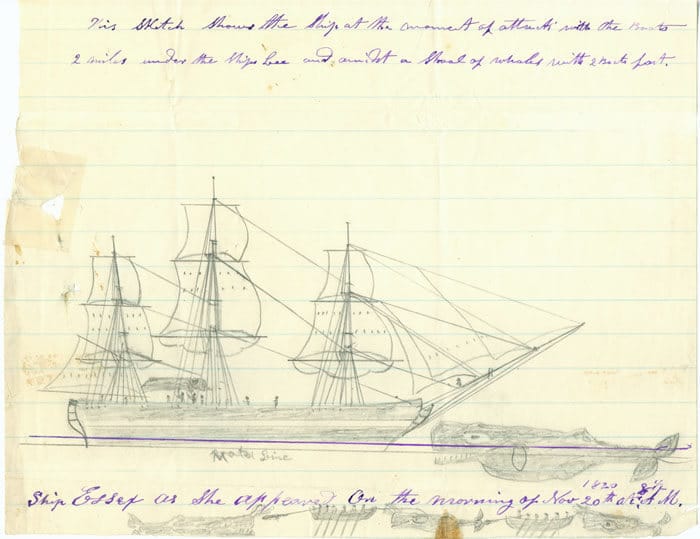
At this time, the nearest land was a staggering 1300 miles away. The twenty men were bobbing in small boats in open water, at least a month from any shore.
Captain Pollard was in shock. He had been out in a whaleboat when the furious whale hit and floated back to find his ship destroyed. "My God, Mr. Chase," he said. "What is the matter?" (I read this comment, which now seems tame, as the 1820 equivalent of, "Owen, what the fuck happened here?")
Chase responded solemnly: "We have been stove [smashed in] by a whale."
Dismayed but thinking fast, Pollard proposed heading to Tahiti (now probably the Marquesas and Society Islands), which he calculated as the closest land. In, as the Smithsonian put it, "one of the most ironic decisions in nautical history," Chase and others balked, telling Pollard that would be a terrible option: those people were cannibals. Instead, they told him, they should head further south. They were hoping they'd quickly catch a steady wind that would carry them somewhere or, even better, be spotted by another whaling ship for rescue.
To be fair, the men knew virtually nothing about where they were. They had no charts for that area and were relying upon a 10-year-old copy of the New American Practical Navigator, a kind of standard guide found on many ships. They knew even less about Tahiti and its neighboring islands. What they knew more about was South America, whose waters had been a prime whaling spot, so to them, heading there made sense. Plus, there wasn't any standard of process for losing your entire ship to an attacking whale. It had never happened before.
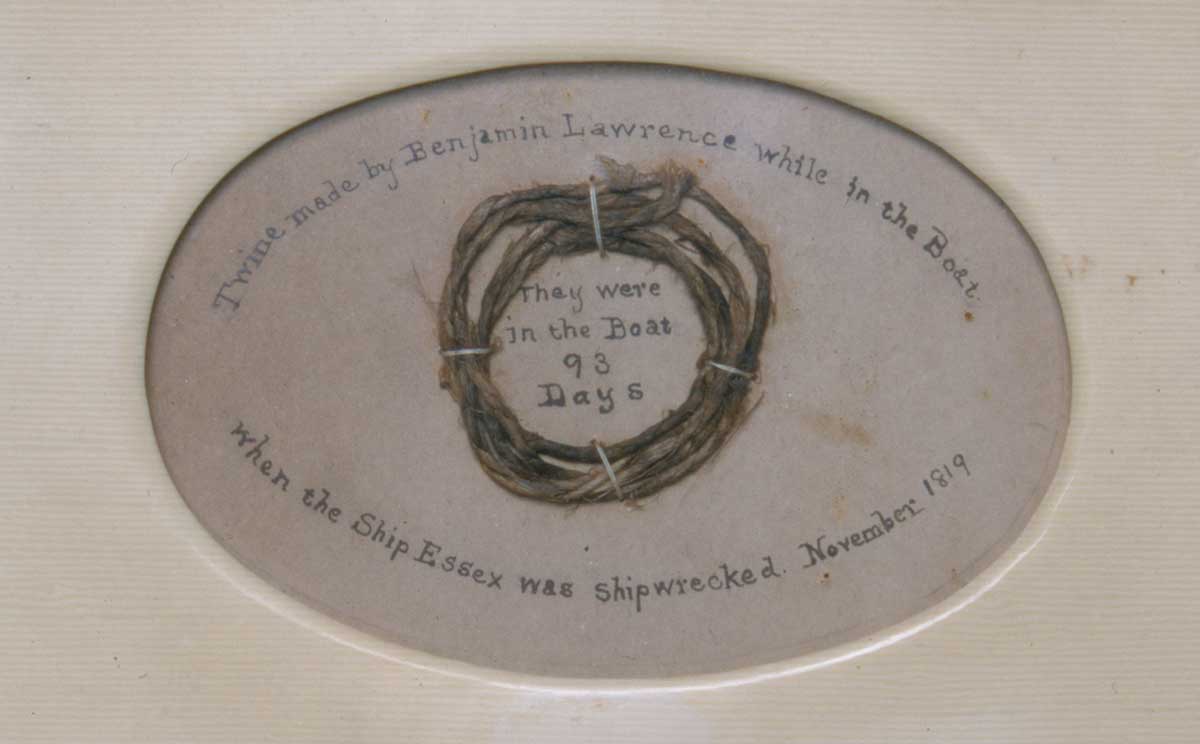
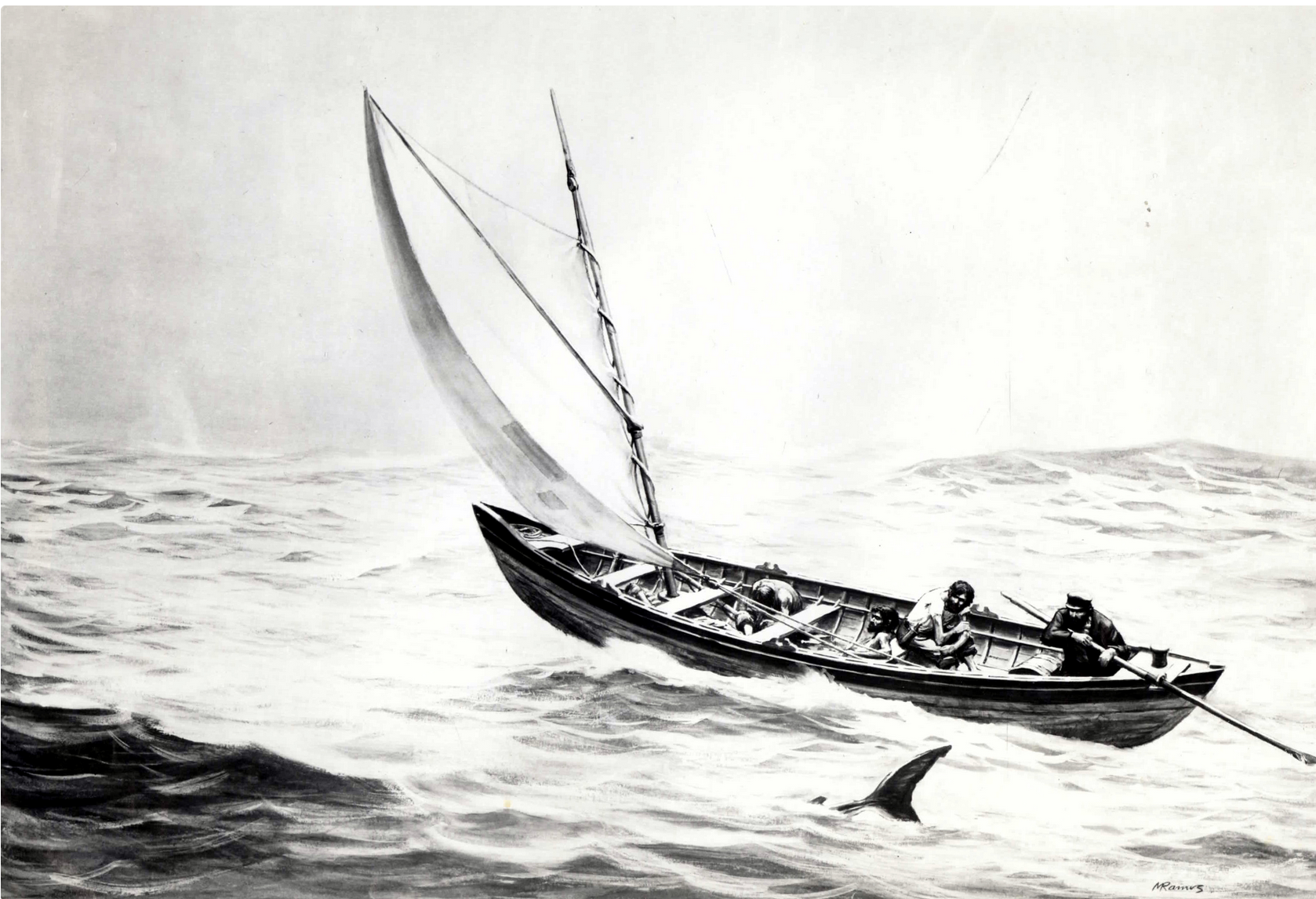
But spoiler alert: their optimism was wrong. What little rations they had grabbed were drowning in saltwater. As they ate what little bread they had, it dehydrated them along with the piercing sun. On the best of days, the men were given about 500 calories each. In a moment of whale solidarity, at one point an orca charged Pollard's whaleboat, but they didn't lose anyone.
After two weeks, the men spotted Henderson Island, but there was not enough food there to keep them all alive. After staying for a week, the men were at a crossroads: Do we stay on this desolate rock, or do we head back to sea? A wee bit of a Hobson's choice. Three men opted to starve on land rather than starve on sea and stayed put. (In fact, they--Thomas Chappel, Seth Weeks, and William Wright--survived on land, eating shellfish and eggs for four months until rescued by an Australian ship.) The remaining survivors got back in the whaleboats and took off.
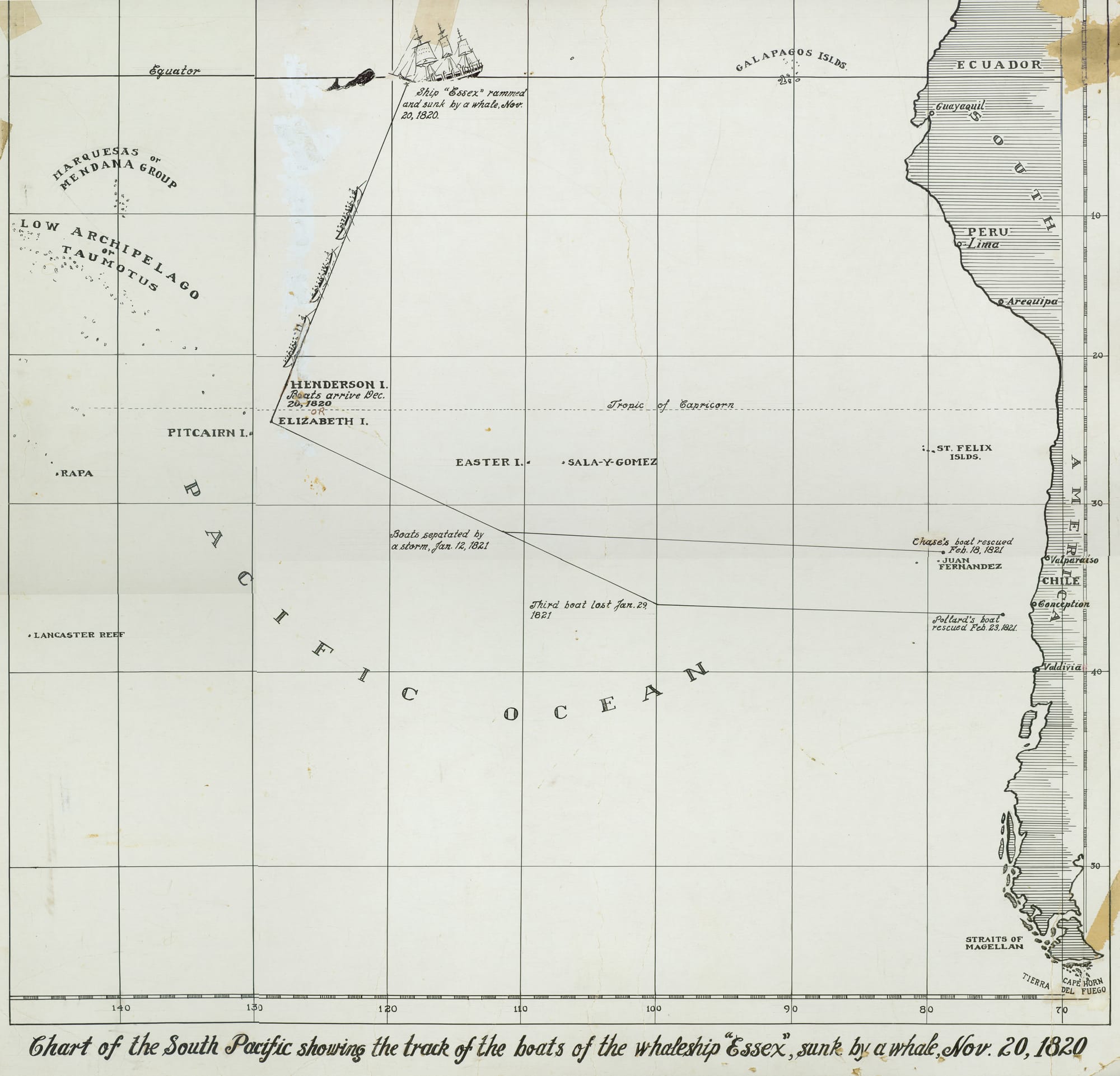
By January, the men were losing their minds. A man on Chase's boat suddenly stood up, deliriously demanded a napkin and a glass of water, then fell into "horrid and frightful convulsions" and died. After nearly two months of starvation, the other men were desperate. They dismembered the body, roasted its organs on a flat stone in the sun, and ate them. Over the next week, they did that three more times as three more comrades died aboard. One boat seemed to disappear from the earth; it was never seen again. (It was found years later with three skeletons on board.) Then Chase's boat and Pollard's boat lost sight of each other. Aboard both, the men grew weaker and weaker. Eventually, they could no longer speak, and they knew they were waiting to die.
The four men in Captain Pollard's boat came to a grim conclusion: they would either all die like this, or some could die in the hopes the others would live. A teenage crewman, Charles Ramsdell, suggested they draw lots. Two would win and eat, one would sort of lose and pull the trigger, and one would definitely lose and get eaten. The "definitely losed" lot went to Captain Pollard's own cousin, Owen Coffin, who was only 16 years old. Pollard had told his aunt that he would look out for him and now offered to take Owen's place. Owen refused. Ramsdell, a friend of Coffin's and near his age, had drawn the lot that required him to take the shot. He could not bear to do so until Coffin put his head down on the edge of the boat and waited.
On February 18, the three survivors on Chase's boat were rescued by an English ship. The Brits had to physically lift the men into the boat, as they could not walk. They'd spent 89 days adrift.
Three hundred miles away, Pollard's boat was down to just himself and Ramsdell. They were gnawing on their crewmen's bones. It took over another week for them to be found by an American ship. The survivors were so traumatized they did not even celebrate and kept confusedly sucking on the bones and hoarding them in their pockets.
(By awful comparison, had the men agreed to sail to the nearest islands as Captain Pollard proposed, it would have been a 20-30 days' journey, likely involving little to no cannibalism.)
In all, only eight men survived the Essex: the three who'd stayed on Henderson Island plus Pollard, Chase, Ramsdell, Benjamin Lawrence, and Thomas Nickerson. (There was also a random guy named Henry Dewitt who deserted the ship entirely before the disaster. Almost nothing is known about Dewitt except that he was Black and, I'm guessing from his well-timed exit, some kind of fortune-teller.)
The five whaleboat survivors recuperated in Chile and eventually developed the gumption to sail back to Nantucket. When he landed, Pollard agreed to tell the entire story to other captains over dinner (or perhaps after dinner, for nausea management). One wrote down his account, which he called "the most distressing narrative that ever came to my knowledge." When recounting the tale, Pollard had to stop himself, stating: "I can tell you no more. My head is on fire at the recollection. I hardly know what I say."
Incredibly, all of the survivors returned to life at sea.
- Pollard went on to captain the Two Brothers, but it also met its demise, wrecking against a coral reef. One horrific tragedy under a captain's belt was perhaps forgivable, but two was not: Pollard never sailed again, instead working as a grocer and watchman/constable. He was known as a good man and spent 40 years married to the very forgiving Mary, who, recall, had watched him leave on the Essex a mere two weeks after their nuptials.
- Chase turned his ship log into a published account of the tragedy, then spent two more decades as a Pacific whaler. He likely couldn't conceive of another vocation: his four brothers were all also mariners. Chase married four times and died in 1869 having lost his mind, hoarding food in his attic. Whether this tied back to his starvation at sea is unknown (but seems probable).
- Ramsdell continued as a whaler, eventually becoming captain of a Salem-based ship (the Lydia). He died in 1866.
- Lawrence, too, became a captain, though he also eventually pivoted to farming and kept the Quaise Asylum, a "poor farm" and asylum for the unemployed, ill, and insane. He was married for decades, had six children, and died in 1879.
- Nickerson had been the youngest crew member aboard the Essex at only fourteen years old. After the tragedy, he stayed in whaling through the 1830s but then began working on cargo ships instead. He retired to Brooklyn and, like Chase, wrote a first-hand account of the Essex disaster. In the 1870s, he moved back to his home state, returned to Nantucket, and opened a boarding house. He died in 1883.
In many ways, now, the true figures have been eclipsed by Ishmael and his comrades in Moby-Dick. Interestingly, however, Melville was writing about the Essex using lore alone. He was not from Nantucket and had never actually been to Nantucket when he wrote the book. He had spent a few years as a sailor, though, which was how he learned the Essex story. He visited Nantucket in 1852, after the book's release. There, he met Captain Pollard and spoke to him, though he kept the conversation light, not wanting to traumatize the man any further.
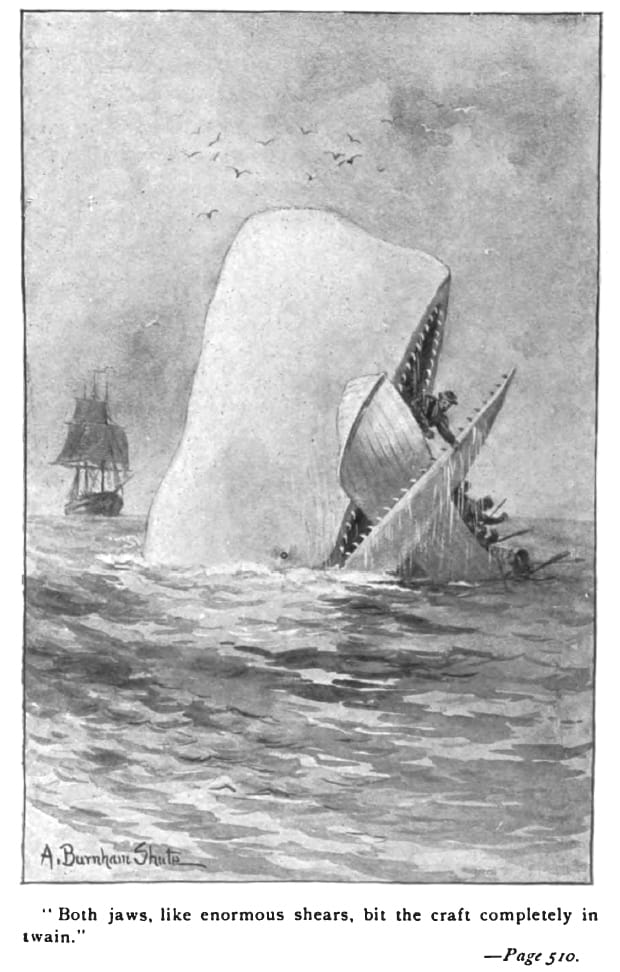
While Melville praised Pollard (calling him the "most impressive man") and knew how remarkable it was to have met him, few others probably found it an astoundingly interesting meeting. Moby-Dick sold poorly in Melville's lifetime. He was never able to complete another novel and became a customs inspector in New York City. Two of his sons died, and Melville sank into depression and alcohol. He died in 1891.
If the story of the Essex fascinated you, you should absolutely check out the Nantucket Historical Association's website all about it (or their website more generally, which is fantastic). (Better than reading Moby-Dick. Sorry, Herman.)
Sources:
- "American vessel struck by sperm whale," History, https://www.history.com/this-day-in-history/november-20/american-vessel-sunk-by-sperm-whale
- Essex, Nantucket Historical Association, https://essex.nha.org/
- "Inside the Terrifying True Story of the Sperm Whale That Sank the Whale-Ship ‘Essex’ and Inspired Herman Melville’s ‘Moby-Dick’," by Eli Wizevich, Smithsonian Magazine, https://www.smithsonianmag.com/smart-news/inside-the-terrifying-true-story-of-the-sperm-whale-that-sank-the-whale-ship-essex-and-inspired-herman-melvilles-moby-dick-180985362/
- Narrative of the Most Extraordinary and Distressing Shipwreck of the Whale-ship Essex, of Nantucket, by Owen Chase, https://www.gutenberg.org/files/61931/61931-h/61931-h.htm
- "The True-Life Horror That Inspired ‘Moby-Dick’," by Gilbert King, Smithsonian Magazine, https://www.smithsonianmag.com/history/the-true-life-horror-that-inspired-moby-dick-17576/
- "The Whaleship Essex," Nantucket Historical Association, https://nha.org/research/nantucket-history/history-topic/the-whaleship-essex/
- "This Real-Life Whaling Disaster Inspired ‘Moby-Dick’," by Xabier Armendáriz, National Geographic, https://www.nationalgeographic.com/history/history-magazine/article/whaling-essex-sperm-whale-nantucket-moby-dick-melville?loggedin=true&rnd=1775754626371